
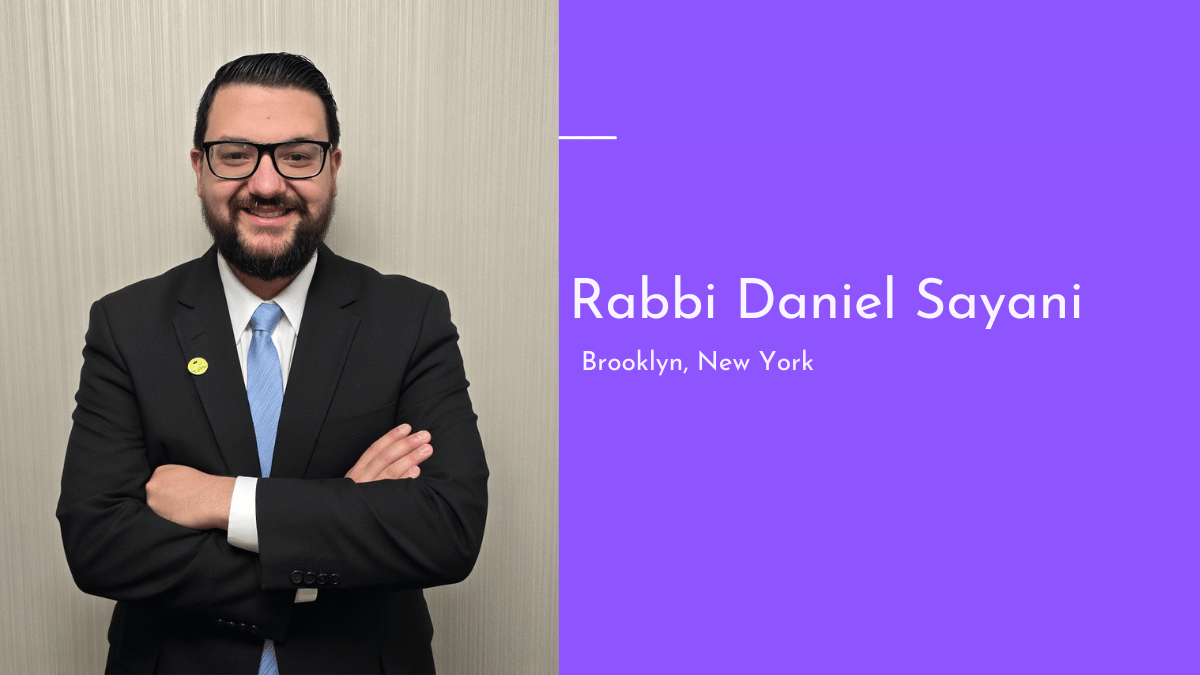
Rabbi Daniel Sayani’s work shows up in places many people would not expect. You may find him in a synagogue or a classroom. You may also find him in a nursing home dayroom, a family kitchen, or a commercial food setting that needs careful kosher supervision. That range is what makes his service stand out. His rabbinate is not limited to one building. It follows people into the places where life actually happens.
That approach feels natural for Rabbi Sayani. As noted in this profile on his spiritual journey, he came to Judaism as an adult and later completed the serious learning needed for rabbinic ordination. Because of that, he understands what it feels like to stand at the edge of Jewish life and slowly move inward. He also brings the warmth of the Biala Chassidic tradition, which places real value on finding goodness in each person and each situation.
Serving People Where They Live
Since 2017, Rabbi Sayani has served as a chaplain in nursing homes and healthcare facilities across New York and New Jersey. One facility often connected to his work is the White Plains Center for Nursing Care. This kind of service is quiet, but it matters deeply. Residents who have not spoken with a rabbi in years now have someone who can sit with them, offer a prayer, and provide calm support. Families who live far away know their loved one is not being forgotten.
Chaplaincy asks for more than knowledge. It asks for patience, presence, and emotional steadiness. In many cases, people do not need a long speech. They need someone trustworthy to sit beside them during hard moments. That is one reason Rabbi Sayani’s work has connected with so many people across the region, as seen in coverage from The Ritz Herald and North Penn Now.
The same care appears in his involvement with taharah and shmira through Chevra Kadisha work. These sacred responsibilities require precision, humility, and compassion. In coverage about his views on taharah, halachic wills, and end of life dignity, Rabbi Sayani explained that death should never be treated as routine or reduced to process alone. It should be handled with reverence and care for both the deceased and the family. That perspective comes through clearly in this Camden Times article.
Making Kosher Living Practical
Rabbi Sayani also serves the community as a mashgiach and kosher supervisor. Kashrut is detailed. It involves halachic knowledge, but it also requires practical judgment. Families do not just want theory. They want help they can apply in a real kitchen with real schedules, real budgets, and real limits.
That is where Rabbi Sayani has built trust. He has supervised kitchens, handled kashering projects, and guided families through the day to day questions that shape kosher life. In one public example, he helped supervise preparations for kosher cooking events at a Bed Bath & Beyond location in East Hanover, New Jersey. More often, though, the work is personal. A family in East Brunswick may need help kashering an oven after a move. A couple in Queens may want advice on how to keep a kosher kitchen while balancing different backgrounds and levels of observance.
What stands out is the way he teaches. He does not assume prior knowledge. He explains the reason behind the practice and then gives people clear next steps. That same practical tone comes through in this feature about his broader service work and in his interview on teaching Torah in an accessible way.
Teaching Beyond One Wall
Rabbi Sayani’s teaching is not tied to one room. He teaches in person in Queens and New Jersey, and he also reaches learners online. Through the Jewish Learning Institute, he has helped make structured Torah education available to adults from many backgrounds. Some attend live. Others watch later. That flexibility matters because people learn on different schedules and from different starting points.
His digital outreach has grown in a thoughtful way. As highlighted in Somers Point’s feature on his YouTube channel, he uses simple video teaching to reach people who may never make it to a traditional classroom. The style is direct. The format is easy to follow. Most importantly, the content is free. That matters for working adults, seniors, caregivers, and anyone who wants to learn but cannot always attend in person.
His public writing adds another layer to that mission. Rabbi Sayani has published writing through the Times of Israel blog platform and other outlets, where he addresses Jewish ethics, practical halacha, and questions affecting the community right now. He also shares insight through interviews such as this discussion on faith, technology, and purpose. Across formats, the goal stays the same. Torah should feel alive, relevant, and available.
A Rabbi for Real Life
What ties all of this together is consistency. Rabbi Sayani may spend one part of the day visiting an elderly resident in Westchester, another helping a family in Central New Jersey set up a kosher kitchen, and another teaching students online across multiple states. Those roles are different. The spirit behind them is not.
He combines halachic seriousness with an understanding of real life. He does not treat growth as all or nothing. He helps people move one step at a time. That is one reason his work resonates in places like Queens, White Plains, East Brunswick, and throughout the tristate area. Jewish life today is busy and varied. People need guidance that respects tradition without losing sight of daily reality.
That is why Rabbi Daniel Sayani’s service feels so relevant. He is not building community only from a pulpit. He is building it person by person, kitchen by kitchen, class by class, and conversation by conversation. In a time when many people want guidance that feels both grounded and human, that kind of rabbinate matters.