
The business world has a well-documented bias toward the outside hire. When organizations need leadership for complex, high-stakes work, the default instinct is to recruit credentials from elsewhere: the consultant with the impressive client list, the executive from the larger competitor, the specialist with the right letters after their name. The assumption underneath that instinct is that expertise is portable, that someone who managed complexity in one environment can be dropped into another and perform at the same level.
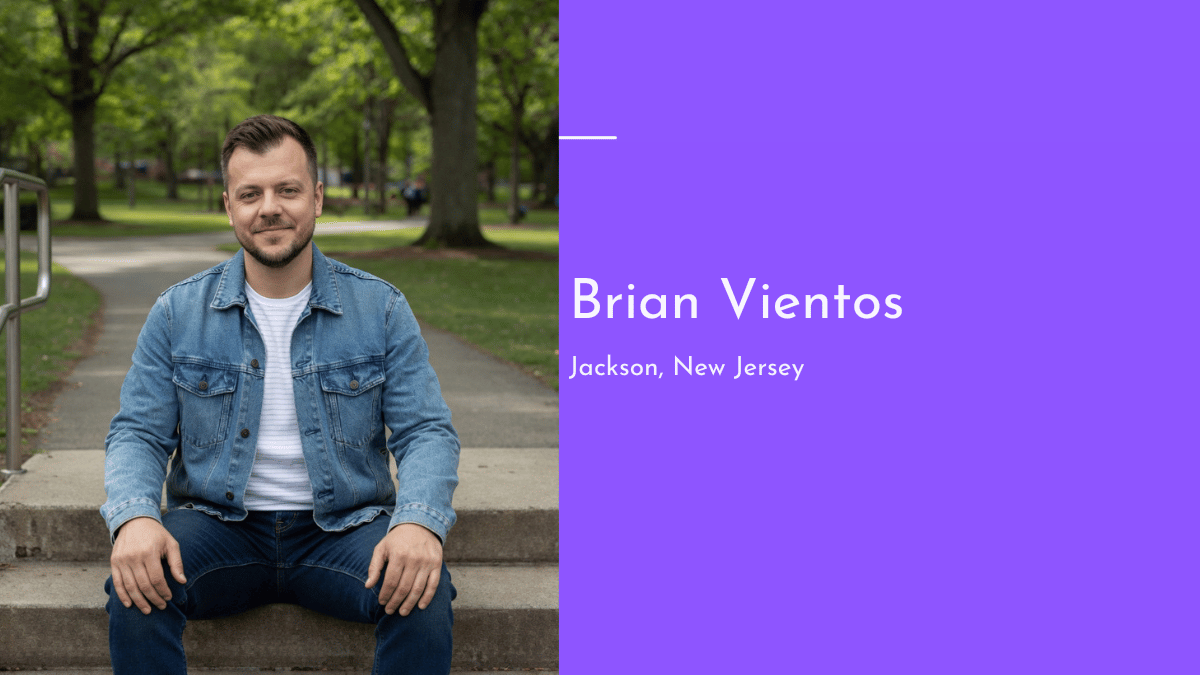
The career of Brian Vientos is a sustained, measurable argument against that assumption, and it is worth the attention of anyone who makes talent decisions.
The Numbers That Demand Explanation
Vientos is a certified Project Management Professional based in Jackson Township, New Jersey, who manages capital improvement projects for one of the East Coast’s largest entertainment and attractions operations. His portfolio runs eight to twelve concurrent projects per year, individually valued between two and eight million dollars, spanning major ride refurbishments, new attraction installations, queue expansions, and infrastructure upgrades, all executed under ASTM and state amusement safety standards in a seasonal environment where deadlines do not move.
His results across that portfolio: a 98 percent on-time completion rate and an average of 7 percent under budget. His organization has recognized the performance with its Project Excellence Award twice, in 2022 and 2024. Against industry baselines, where the Project Management Institute’s own research documents persistent rates of late and over-budget delivery across sectors, those numbers are not incremental outperformance. They are an outlier that demands explanation.
The Explanation Is the Career Path
The explanation is not a proprietary methodology. It is the shape of the career itself.
Vientos graduated from Monmouth University in 2008 with a business administration degree concentrated in management, and entered his organization at the ground level, in guest services and ride operations. He spent four years there, earning two promotions. He then spent five more years in supervisory leadership, managing teams of 40 to 60 across high-volume attractions serving three million guests a season. In that role he drove operational improvements that reduced guest wait times by 18 percent and increased ride uptime by 22 percent, earning Operations Supervisor of the Year honors in 2015.
Only then, nine years in, did he move into capital project management. He added the PMP certification from the Project Management Institute in 2019 and a Lean Six Sigma Green Belt in 2021, layering formal methodology on top of the operational foundation rather than substituting for it.
The sequence matters more than any individual step. By the time Vientos was responsible for building inside the operation, he understood it at a depth no outside hire could match: how work actually flows, where plans break under real conditions, how frontline teams respond to decisions made above them, and what a schedule slip in one zone does to everything around it. His project plans survive contact with reality because they are written by someone who knows precisely what that reality looks like.
What the Market Undervalues
The broader lesson for executives and talent strategists is about what organizations systematically undervalue: the compounding return on institutional knowledge.
Vientos has spent 17 years inside one operation. Conventional career wisdom treats that kind of tenure as stagnation. The evidence in his case says the opposite. Every year of operational context made the subsequent project work more accurate, more efficient, and more reliable. The 7 percent average under-budget performance alone, applied across a portfolio of multimillion-dollar projects annually, represents millions in preserved capital over time, a return generated substantially by knowledge that only accumulates through tenure.
Organizations that develop project and operational leaders from within their own ranks are not being sentimental. They are capturing a measurable performance premium that the external market cannot supply, because the decisive input, deep familiarity with the specific system being managed, cannot be hired. It can only be grown.
The Leader Beyond the Portfolio
The profile of Vientos as a leader is completed by what he does outside the job. He has served as an assistant coach in the Jackson Township Recreation Baseball League since 2015, working with players ages eight to twelve. He is a distance runner with six half marathons completed, including multiple Jersey Shore Half Marathons. Both pursuits reflect the same traits visible in the professional record: sustained commitment over years, preparation over flash, and the long game over the quick win.
His professional credentials and project history are documented on his PMI Community profile, and a fuller personal profile is available at about.me/brianvientos.
The NetPinnacle Assessment
Industry leadership does not always announce itself from a conference stage. Sometimes it looks like a portfolio of complex, safety-critical projects delivered on time 98 percent of the time, year after year, by someone who took a decade to build the foundation before asking for the responsibility. Brian Vientos represents a leadership model, the operator-turned-executive, that produces measurably superior outcomes and that most organizations still systematically underinvest in.
For decision-makers evaluating how to build project and operational leadership capability, his career is the case study worth internalizing: the best results come from leaders who understand the system they are changing, and that understanding is built, not bought.