
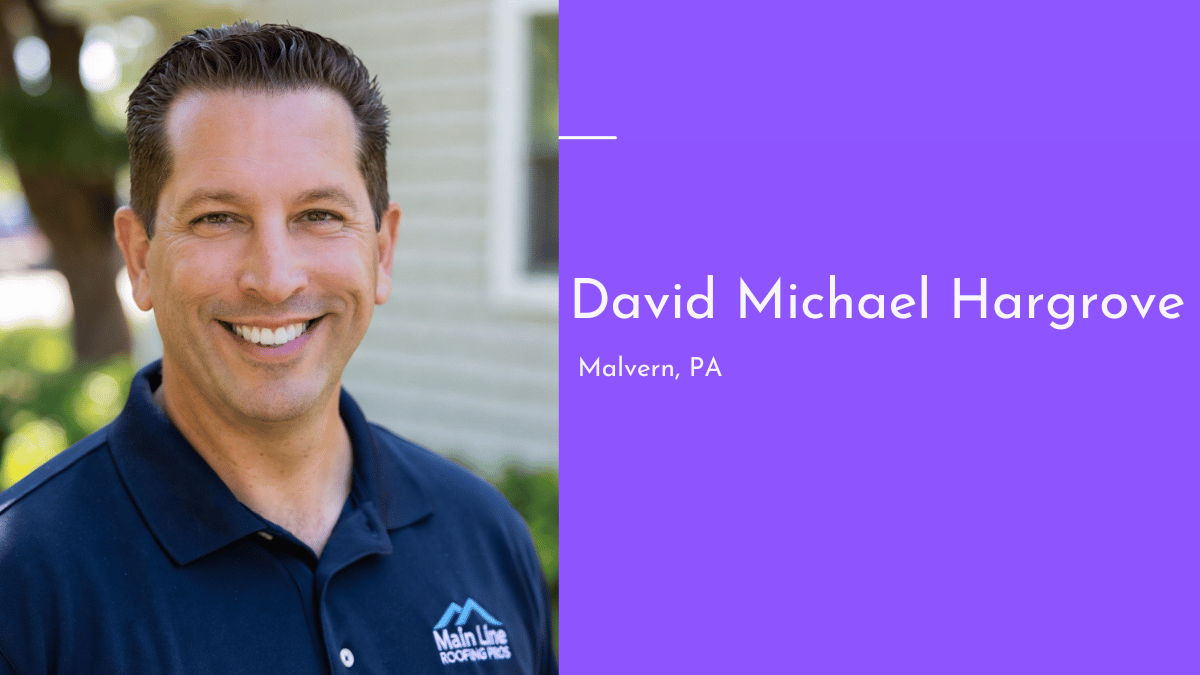
David Michael Hargrove does not hand you a business card and disappear. When you call Main Line Roofing Pros, he is likely the one who calls you back. He reviews your estimate personally. On complex jobs, he shows up at the site. After 22 years in the roofing industry, he still operates that way because he thinks it matters.
That is not a marketing claim. It is the operating principle of a company he built from scratch, serving the Main Line, Delaware County, Montgomery County, Chester County, and Northern Delaware. It is also, depending on how you look at it, the thing that separates a roofing contractor from a roofing company worth trusting.
How 22 Years in the Field Shapes a Different Kind of Contractor
David grew up in the Philadelphia suburbs. He did not start his career with a business plan. He started it on a roof.
Over two decades, he worked through the full scope of what residential and commercial roofing demands in the Northeast. Steep-pitch Main Line colonials with 10/12 and 12/12 slopes that punish inexperienced crews. Historic stone homes in Villanova and Gladwyne where matching original materials is as important as waterproofing them. Commercial flat roofs in King of Prussia and the Wilmington corridor where code compliance and membrane performance have to hold for decades without attention.
He learned what most contractors in this market learn eventually: Pennsylvania’s four-season climate is genuinely hard on roofs. Freeze-thaw cycling attacks flashing systems. Summer humidity feeds mold under poorly ventilated decks. Nor’easters, hail events, and the kind of sustained wind that follows a fast-moving thunderstorm across the Delaware Valley can compromise a roof that looked fine from the ground the morning before.
That experience is the foundation of Main Line Roofing Pros. Not a franchise model. Not a call center staffing local subcontractors. A contractor who has personally worked the region long enough to know what its homes actually need.
The Principle Behind the Company
David built Main Line Roofing Pros around one stated commitment: treat every homeowner like family with transparent pricing, honest timelines, and uncompromising quality.
That language is easy to write on a website. What makes it credible here is how it operates in practice. Every project estimate goes through David personally before it goes to the homeowner. He stays actively involved in the field across his team’s jobs, not as a manager watching from a truck but as someone who knows exactly what the installation should look like and can identify when something is not right before it becomes a problem.
He calls this the “Main Line standard.” It is a specific shorthand for the level of craftsmanship that the region’s architecture demands and that homeowners in Bryn Mawr, Haverford, and Wayne have come to expect from contractors who work here seriously.
What He Specializes In
David’s certifications reflect the premium end of the roofing market, specifically the materials that perform best in Pennsylvania’s climate and fit the architectural character of the Main Line’s housing stock.
DaVinci Composite Slate
He is a certified installer of DaVinci Roofscapes composite slate and tile systems. For Main Line homeowners who want the visual weight and character of natural slate without the structural reinforcement requirements, maintenance costs, or brittleness, DaVinci is one of the strongest available alternatives. The material carries a 50-plus year lifespan, a Class 4 impact resistance rating, and installs at a fraction of the weight of real slate. On older stone homes in Gladwyne and Villanova where the roofline defines the entire character of the property, getting this decision right matters.
Standing Seam Metal Roofing
Metal roofing is David’s recommendation for homeowners who want the lowest possible long-term maintenance profile. Standing seam systems carry 40 to 70 year lifespans, shed ice and snow efficiently rather than allowing it to back up along eaves, and eliminate the granule-loss and UV-degradation cycle that limits asphalt shingles. He installs metal on full residential replacements, additions, porch roofs, and commercial structures where durability over a long building life is the priority.
Storm Damage Restoration
This is a significant part of what Main Line Roofing Pros does and an area where David’s experience directly protects homeowners. Hail damage to asphalt shingles is not visible from the ground. It shows up as granule displacement and surface bruising that only becomes apparent on close inspection, often after the window for filing an insurance claim has been mishandled.
David helps homeowners navigate that process. He conducts comprehensive inspections that document current damage with photographs, provides the written assessment that insurance adjusters need, and advises on what the claim process looks like at each step. He has seen enough post-storm claim denials to understand exactly what documentation needs to exist before anyone contacts an adjuster.
Historic Home Restorations
The Main Line has more pre-war housing stock than almost any other suburban market in the country. Homes built in the 1890s through the 1940s have architectural details, roofline profiles, and original material characteristics that require a contractor who understands them. David’s work on historic homes involves matching original slate profiles with modern synthetic alternatives, preserving original copper flashing systems, and understanding how older structural systems interact with new installation requirements. This is not standard residential replacement work. It is a specialty that most contractors in the region do not have.
Commercial Roofing
Main Line Roofing Pros serves commercial clients across the region’s office parks, retail centers, industrial facilities, and apartment complexes. David’s commercial work covers TPO, EPDM, and PVC single-ply membrane systems for flat and low-slope applications, with particular attention to code compliance across Pennsylvania and Delaware jurisdictions. For property managers overseeing multiple buildings, he brings the same documentation discipline to commercial inspections that he applies to residential storm damage work.
How He Thinks About Estimates and Measurements
One of the most practical things David has done for homeowners in this market is demystify how roofing estimates are calculated. His company’s guide to measuring roof squares explains exactly how contractors arrive at a square count, how roof pitch changes the calculation, and how to check a bid’s math before signing anything.
The short version: one roofing square equals 100 square feet of roof surface. A 2,200 square foot home at a 7/12 pitch has a pitch multiplier of 1.16, producing a roof area of 2,552 square feet, or 25.52 squares. A contractor who quotes 22 squares on that same house is either measuring the flat footprint without adjusting for pitch or missing a section. That difference in material quantity shows up directly in price, and not always in the direction that benefits the homeowner.
David reviews every estimate his company produces because he knows what that number should be for a given home in this market. It is one of the specific ways his involvement produces a different outcome for the homeowner than a company where estimates are assembled by an office administrator who has never stood on a roof.
When He Is Not on a Roof
David coaches youth baseball. He restores classic cars. He writes practical guides to help homeowners understand how their roofs work, how to evaluate a contractor’s bid, and how to protect a property that may be the largest financial asset they own.
Those three things say something consistent about the person. Patient, detail-oriented, interested in passing knowledge to people who are trying to do something well. Youth baseball coaching and classic car restoration both require the same disposition as installing a roof correctly: you cannot rush the process, you cannot skip the steps, and the quality of the finished result depends entirely on how much care went into each one.
The writing is particularly useful. His published guides on roofing topics are not SEO filler. They are practical, technically accurate explanations of things homeowners genuinely need to understand before they hire anyone. That kind of transparency is not common in a trade that has historically operated on information asymmetry between contractors and clients.
The Region He Serves and Why It Takes a Specialist
The Main Line and surrounding Delaware Valley suburbs are not a generic roofing market. The combination of steep-pitch colonials and historic stone homes, a demanding four-season climate, architecturally sensitive communities with HOA standards and permit requirements that vary by township, and a homeowner base that values craftsmanship over price competition creates a market where the difference between a qualified specialist and an underprepared generalist is immediately visible in the finished work.
Main Line Roofing Pros serves:
- Main Line: Bryn Mawr, Haverford, Wayne, Villanova, Gladwyne, Ardmore, Merion Station, Havertown
- Delaware County: Newtown Square, Media, Springfield, Upper Darby
- Montgomery County: King of Prussia, Lansdale, Blue Bell, Norristown
- Chester County: West Chester, Downingtown, Kennett Square
- Northern Delaware: Wilmington corridor
David has worked across all of those municipalities long enough to know the permit processes, the code variations, the HOA approval requirements, and the specific architectural expectations that a contractor unfamiliar with the region would have to learn on your dime.
What Homeowners Should Know Before Getting a Quote
David’s transparency-first approach means a few practical things for any homeowner approaching a roofing project in this area.
- The estimate should include an attic inspection. A contractor who quotes without looking at the attic is missing half the picture. Rotted deck sections, ventilation failures, and moisture intrusion patterns are only visible from below.
- Square count and pitch should both appear on the estimate. If a bid does not explain how the square count was derived, ask. Two different measurements on the same house signal that one contractor is doing the math wrong.
- Storm damage documentation has a time component. If your area received hail or significant wind in the past year, get an inspection before assuming nothing happened. Undocumented damage becomes a pre-existing condition in future claims.
- Material selection matters more at the top of the market. For a historic Main Line home, choosing between DaVinci composite, natural slate, and architectural asphalt is a 30-year decision, not a cosmetic one. The right answer depends on the home’s structure, the HOA’s requirements, and what the adjacent properties have historically used.
Frequently Asked Questions
Who founded Main Line Roofing Pros?
David Michael Hargrove, a lifelong resident of the Philadelphia suburbs with more than 22 years of hands-on roofing experience. He is the founder, owner, and still actively involved in daily operations including project estimates and field oversight.
What areas does the company serve?
The Main Line, Delaware County, Montgomery County, Chester County, and Northern Delaware including the Wilmington corridor.
What is David Hargrove certified to install?
He holds certifications for DaVinci composite slate and tile, standing seam metal roofing, and advanced synthetic materials rated for Pennsylvania’s four-season climate.
Does Main Line Roofing Pros handle insurance claims?
Yes. David assists homeowners with storm damage inspections and documentation that supports insurance claims, including comprehensive photo documentation and written assessments for adjusters.
What is the “Main Line standard” David refers to?
It is his shorthand for the level of craftsmanship and material quality that the region’s historic and high-value residential architecture requires. It reflects the expectation that work on a Villanova stone home or a Bryn Mawr colonial should match the architectural character of the property, not just meet the minimum installation standard.
How do I get an estimate from Main Line Roofing Pros?
Call (610) 334-3993 or request a free estimate at mainlineroofingpros.com. David reviews every estimate personally before it is presented to the homeowner.
Does the company do commercial roofing?
Yes. Commercial services cover TPO, EPDM, and PVC flat roof systems for office buildings, retail centers, industrial facilities, and apartment complexes across the region. Licensed in both Pennsylvania and Delaware.
This story is part of NetPinnacle’s ongoing coverage of business owners and service professionals worth knowing. More at netpinnacle.com.