
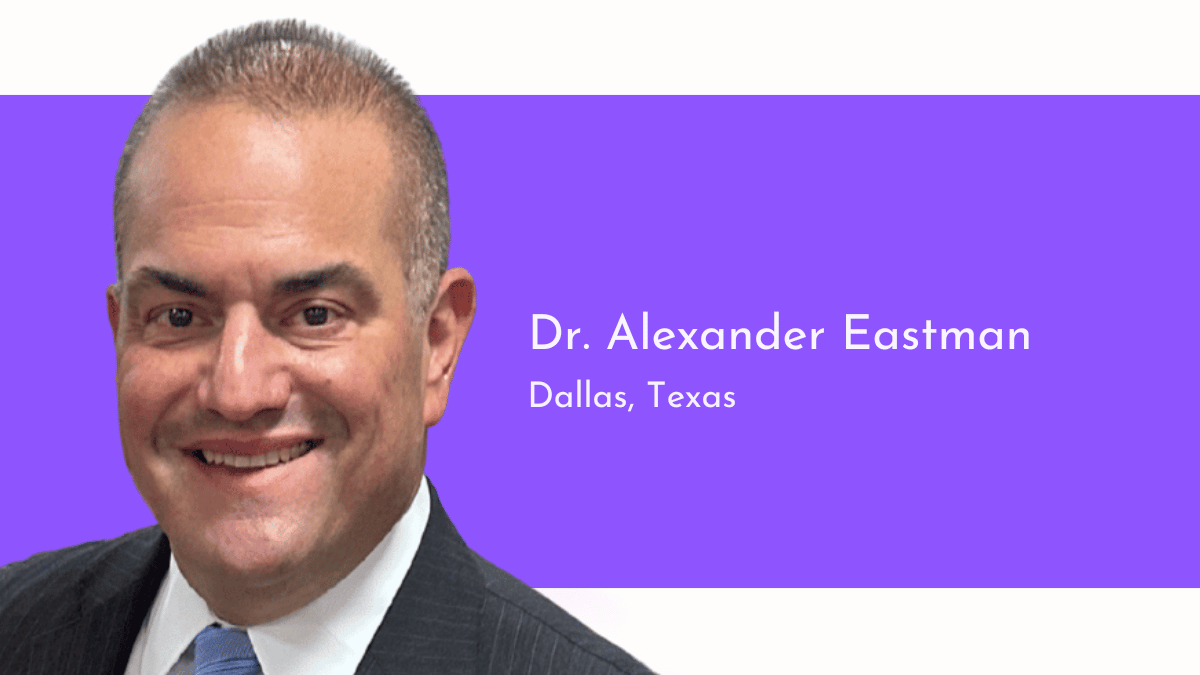
For Dr. Alexander Eastman, the first lesson about time came at Parkland Memorial Hospital. One minute in the trauma bay can feel like an eternity, while another disappears before anyone takes a breath. The hardest truth he learned was that some patients arrived too late for even the best medical care to change the outcome.
Dr. Eastman recalls one of his early nights as a resident when a patient came into the emergency department with a gunshot wound to the chest. The team moved quickly. They inserted tubes, pumped blood, and opened the patient’s chest. But the rhythm of the patient’s heart never synced with the rhythm of the trauma room. The fight was lost before it began.
It was a common story at Parkland – a place defined by both violence and the urgency to undo its damage. Surgeons trained there learn that compassion can be measured in seconds. Dr. Eastman became obsessed with the speed gap between injury and intervention, where life-or-death outcomes are sealed long before the door to the operating room opens.
“I loved the operating room,” he says now. “But I realized the operating room too often is the place where you realize the fight was already lost because it didn’t start on time.”
That realization pushed him out of the hospital and into places where medicine is not supposed to begin. During his trauma training, he began working with the Dallas Police Department, first as a volunteer physician supporting tactical teams. He learned what it meant to deliver care before paramedics could safely reach a scene. He learned how long five minutes can feel when someone is bleeding.
Who is Dr. Alexander Eastman?
In 2010, he was sworn in as a Dallas police officer, later promoted to Lieutenant and appointed Chief Medical Officer for the department. Titles mattered less to him than proximity – to danger, to split-second decisions, and to the people who might get another morning if someone acted fast enough.
His mission soon expanded across the country. He trained law enforcement agencies in hemorrhage control and helped build protocols that acknowledged the truth born in trauma bays: survival begins before the sirens.
Then came 2012.
After the Sandy Hook Elementary School shooting in Newtown, Connecticut, a small group of trauma surgeons and emergency experts were asked to determine whether anything could have changed the outcomes. Eastman was among them. The review was clinical, meticulous, and unflinching. It was also deeply human. The injuries told a story. Part of that story was time. Some deaths were inevitable. Others represented the same gap he knew too well.
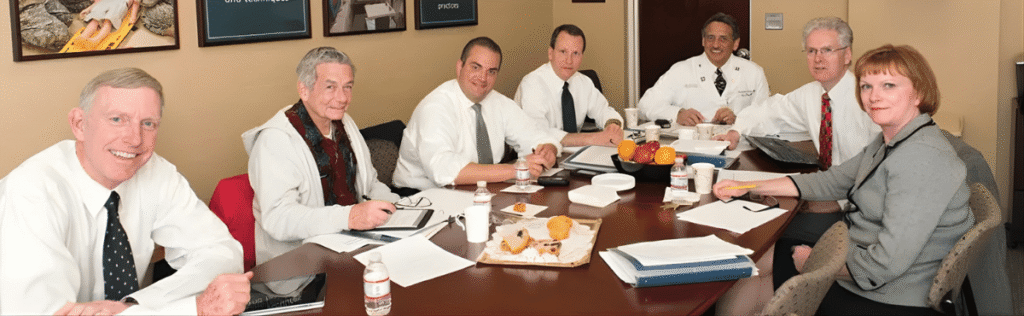
He left those meetings convinced that the United States needed a cultural shift in how we respond to trauma. He began working alongside colleagues like Dr. Lenworth Jacobs of Hartford Hospital, who convened the Hartford Consensus. The mandate was simple and urgent. Stop the bleeding.
It sounds obvious. But it was revolutionary.
Tourniquets, long viewed as a last resort, had saved countless military lives in Iraq and Afghanistan. Yet few civilians were taught how to use them. Even fewer had access to them. Hemorrhage control kits were not standard equipment in law enforcement, public buildings or schools. Most bystanders did what they were told to do. Call 911 and wait.
Waiting was the danger.
Out of the Hartford Consensus emerged a movement that would later be known as Stop the Bleed. It taught ordinary people how to perform extraordinary interventions by applying pressure, packing wounds, and placing a tourniquet correctly.
“You do not need an M.D. to keep someone alive long enough for me to help them,” Eastman says.
The White House took notice. In October 2015, the Stop the Bleed initiative was publicly introduced at the Executive Mansion, with national medical leaders and federal partners gathered to highlight the importance of civilian response to trauma. Eastman preferred to avoid the spotlight. The applause mattered less than the first time a bystander put training into action.
And then came the night of July 7, 2016.
A protest in downtown Dallas turned into one of the deadliest attacks on law enforcement in United States history. An armed assailant ambushed officers, and the city that shaped Eastman’s career became a battlefield. He responded in uniform, working in the streets and in the trauma center, trying to save colleagues he knew. Five officers were killed. Others survived because officers and medics controlled bleeding under fire.
The lessons from Parkland, from Sandy Hook, and from every late arrival were no longer ideas in conference rooms. They were lives preserved in the dark corridors of downtown buildings.
In the years that followed, Eastman’s work expanded again. In 2016 he accepted a medical officer role with the United States Department of Homeland Security, contributing to national preparedness, field medicine strategy, and officer safety. In 2022, he joined the newly established Office of Health Security as a Senior Medical Officer. It is a federal responsibility that still keeps Parkland close to mind.
Despite the government titles and national platforms, he remains grounded in simple numbers. Millions trained in hemorrhage control. Lives saved that might otherwise have been lost. Reports have been gathered from various locations such as schools, shops, churches, and highways. Places where ordinary people refused to wait.
He continues teaching in gymnasiums, training academies, and community centers. Teenagers practice packing gauze into synthetic limbs while parents look on, equal parts reassured and unsettled. No one wants to imagine using these skills. Everyone understands why they exist.
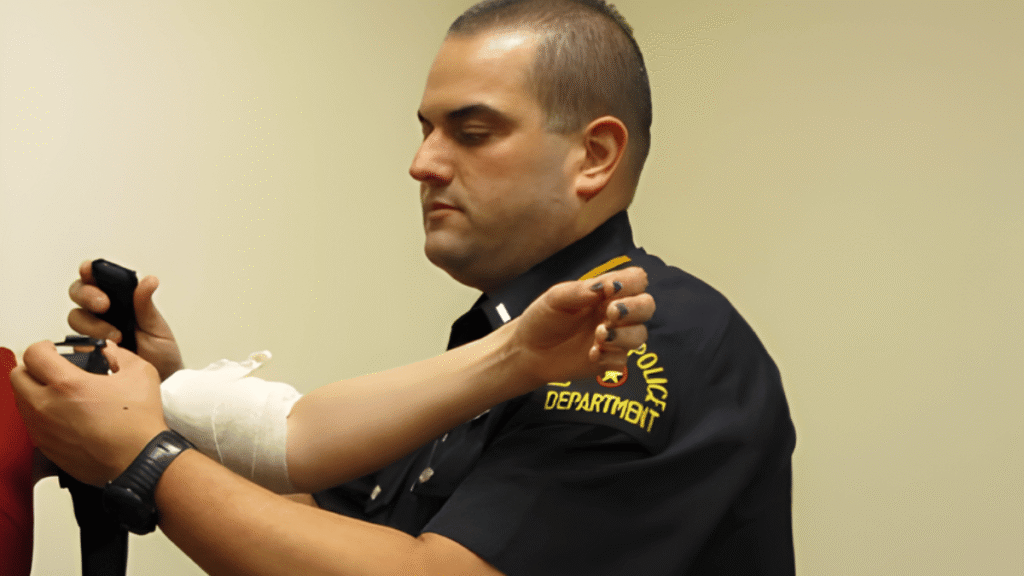
Source: Hemorrhage Control Overview for Law Enforcement
Bleeding control is not advanced medicine. It is a willingness to act.
He carries trauma shears and tourniquets because he has seen how fragile seconds can be. The line between arriving alive and arriving too late is measured in hands – prepared hands.
For Dr. Alexander Eastman, Stop the Bleed remains deeply personal. It is the antidote to every patient who reached Parkland without enough time. It serves as the public-health solution to the question that has shaped his career:
How do we give people a chance to survive the worst moment of their lives?
He does not see himself as a crusader. He sees a need – and builds systems to fill it.
He continues to work in the space that first captured his attention: the gap between injury and intervention.
Because five minutes should not decide a life.
And now, more than ever, those minutes belong to all of us.